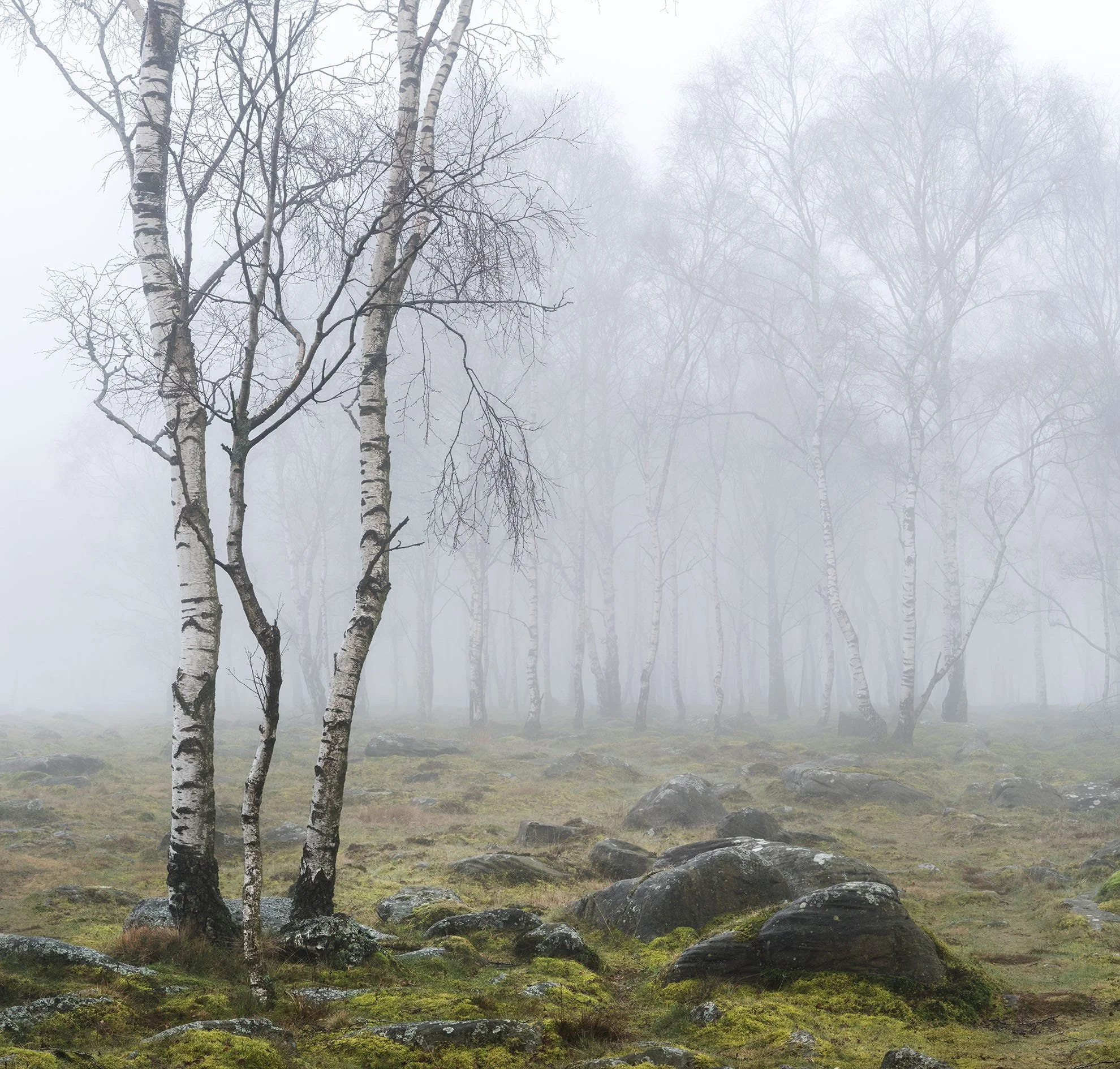
The more I learn and improve my photography, with light, with composition, with patience , the more I realise that story is an important ingredient in the process of creating an image.
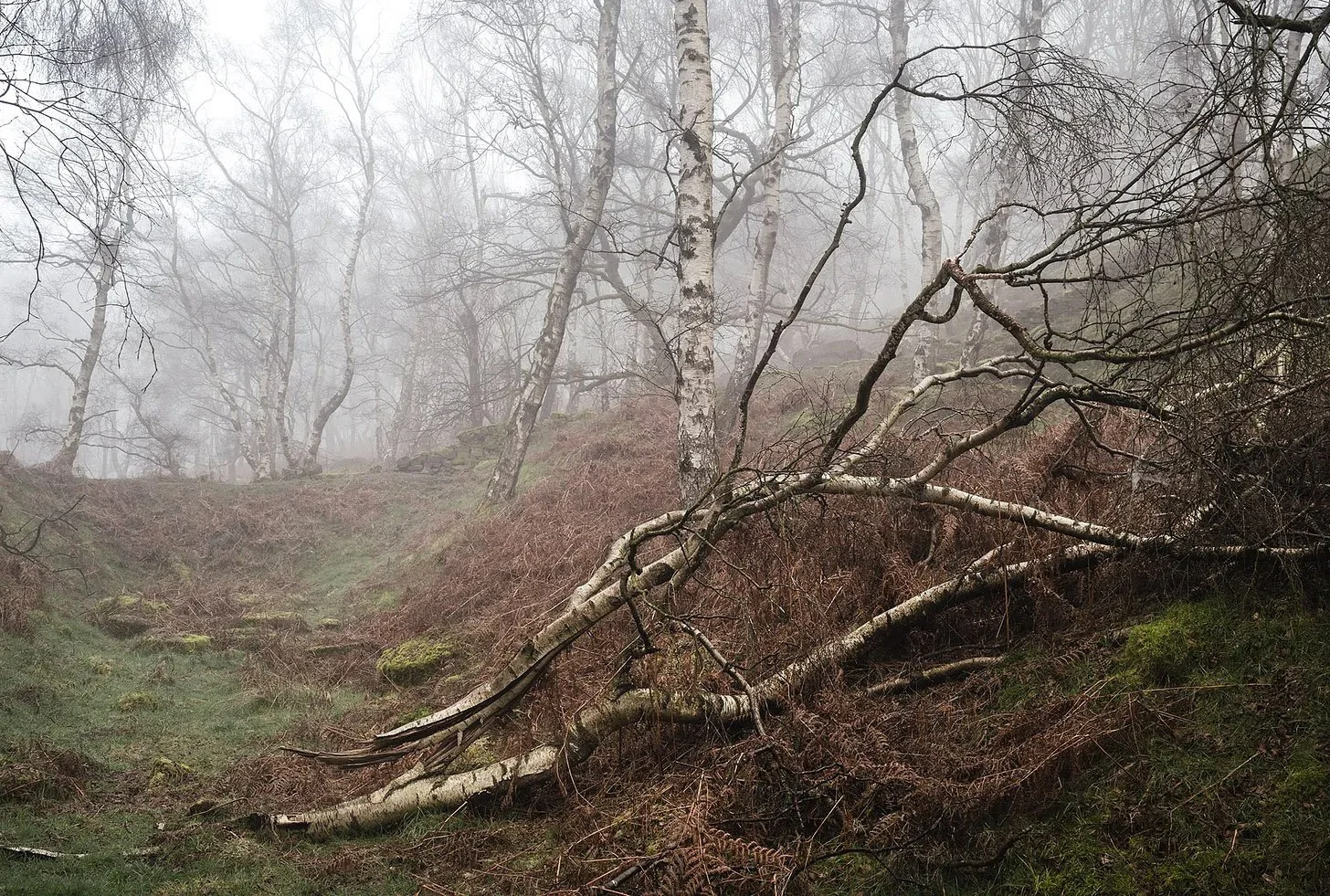
This doesn’t have to be anything complicated or dramatic. Sometimes the “story” in a photograph is very simple. A fallen tree catching a shaft of light. A narrow path winding its way through a stand of trees. A patch of mist hanging between trunks on a quiet morning. These small moments can carry just enough suggestion to draw the viewer in.
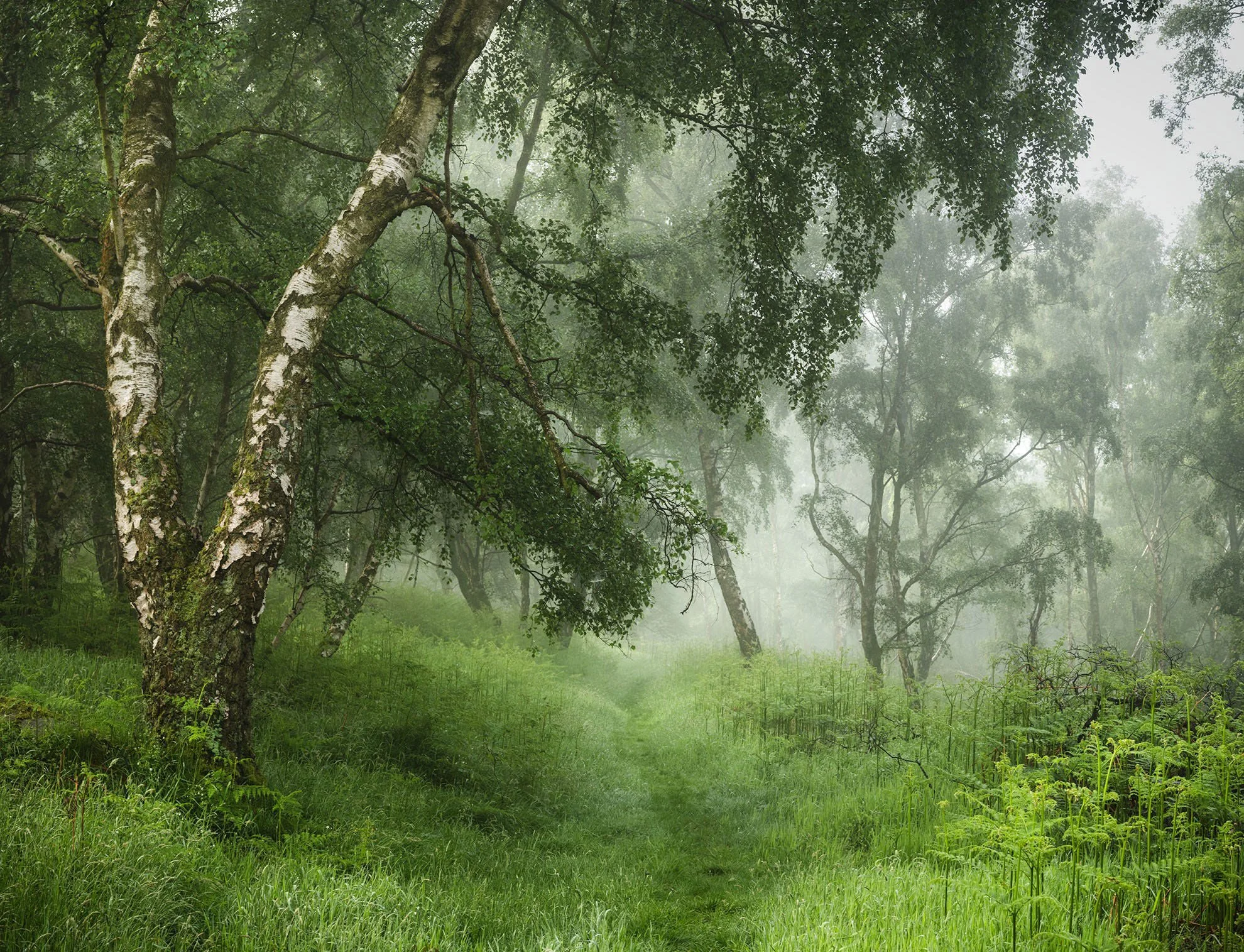
For a long time, especially when I was learning, my attention was focused mostly on the technical side of photography. Light, exposure, composition, the fundamental building blocks of making a good photograph. Those things still matter, of course, and always will. But over time I’ve started to realise that technique alone rarely makes an image memorable.
Something else needs to be present. Something that gives the image a sense of purpose.
Particularly with woodland photography, there is a temptation to simply point the camera at a scene, a group of trees, perhaps, especially when the light and conditions look good. The forest can be full of atmosphere on the right day: soft light filtering through branches, mist drifting through the trunks, leaves glowing after rain. When you first encounter these moments it is easy to feel that the photograph is already there, waiting to be taken.
So we press the shutter. And sometimes that works.
But more and more I find myself slowing down and asking a simple question before I take the photograph: what’s the story here? What is it about this scene that caught my attention in the first place? What am I trying to show the viewer?
Often the answer is not obvious at first. Woodland scenes can be visually complex. There are branches crossing everywhere, layers of trunks, patches of light and shadow competing for attention. Without a clear subject the photograph can quickly become confusing.
That is where the idea of story becomes useful.
When I say story, I don’t mean something literal or cinematic. A photograph doesn’t need a beginning, middle and end. More often the story is simply a suggestion, something that gives the viewer a place to rest their eye and a reason to stay with the image for a moment longer.
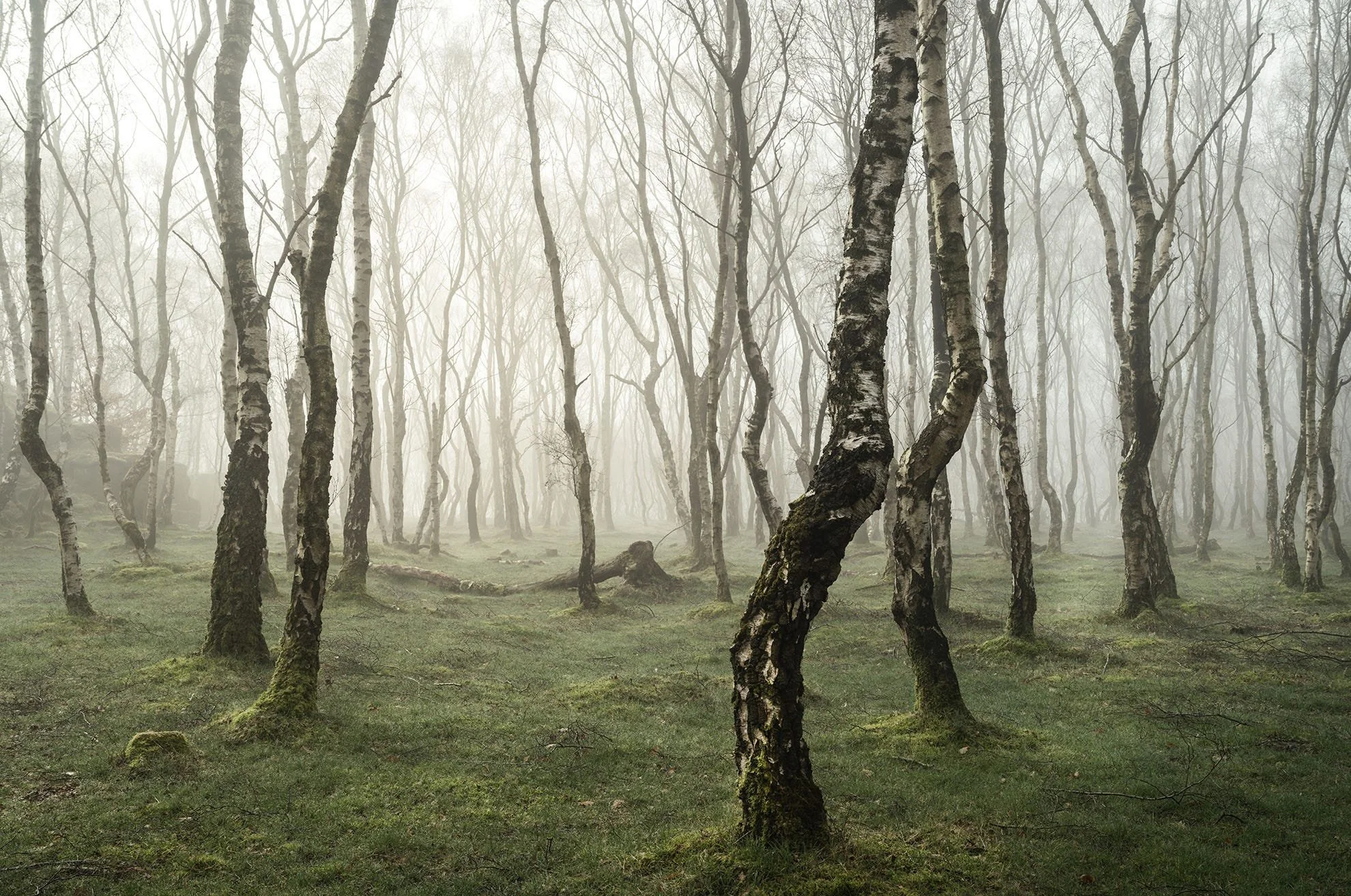
Perhaps it is a single tree standing apart from the others. Perhaps it is the way a shaft of light isolates a fallen trunk against a darker background. Perhaps it is a path disappearing into the distance, inviting the viewer to imagine where it might lead. It could be the relationships of the trees together, how the shape and form respond within the scene.
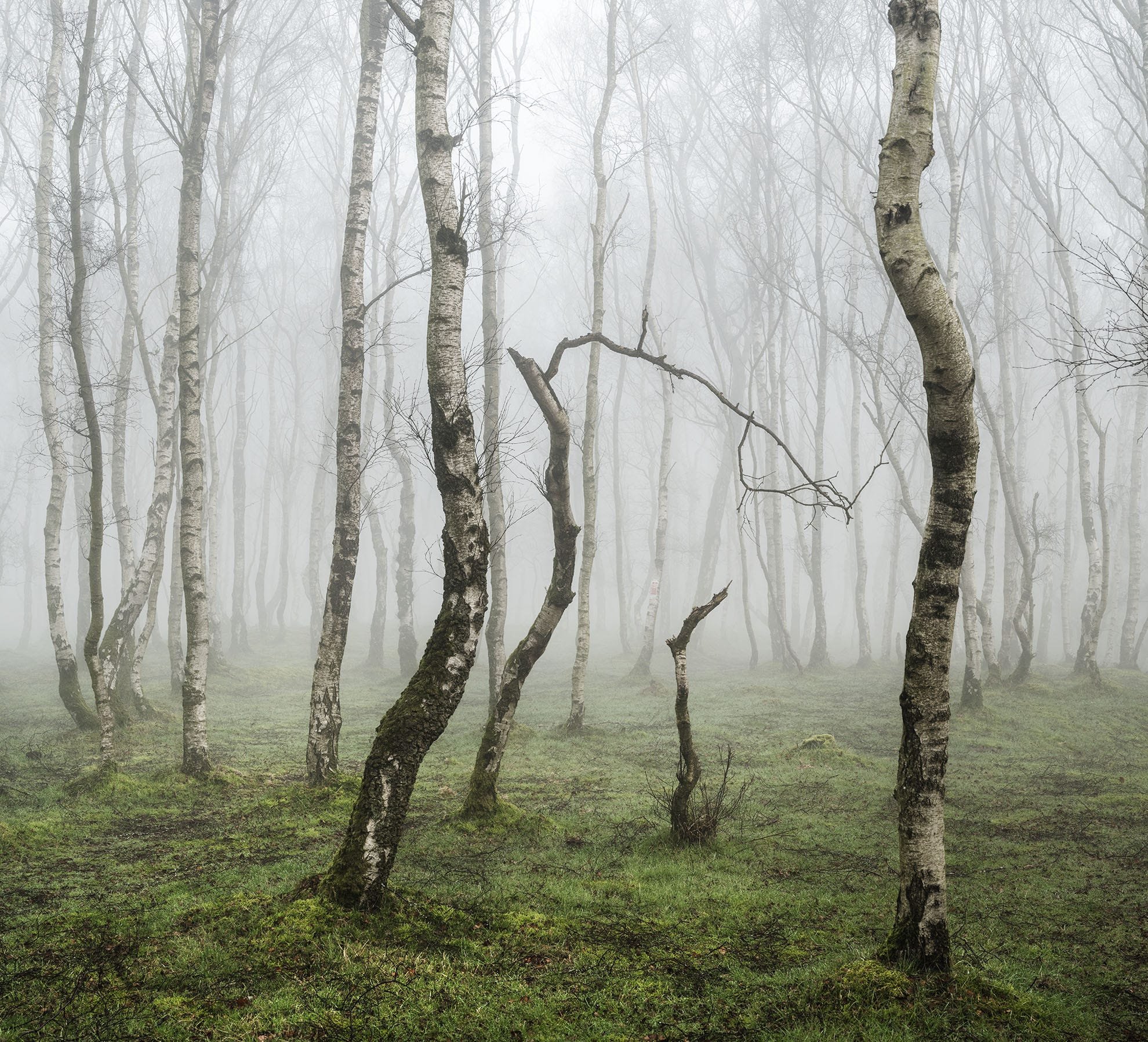
These small elements create a sense of direction within the frame. They help guide the viewer through the image.
I remember standing in a woodland one winter morning when the light was soft and low. At first glance it looked like any other patch of forest, a tangle of trunks and branches, nothing particularly remarkable. My first instinct was simply to photograph the scene in front of me.
But after a few moments I noticed a fallen tree lying across the forest floor. A narrow beam of sunlight had found its way through the canopy and landed directly on the trunk, while everything around it remained in shadow. Suddenly the scene felt different. The fallen tree became the subject, almost like a quiet monument resting among the darker shapes of the forest.
That small shift in attention changed the photograph completely.
Instead of capturing the entire woodland, I focused on that single relationship between light and subject. The image became simpler, more intentional, and hopefully, more engaging for the viewer.
For me, this is where photography begins to feel more challenging, but also far more rewarding.
In the past I might have returned from a walk with dozens of photographs. Many were pleasant enough, but very few stayed with me for long. They showed what the woodland looked like, but they didn’t necessarily say much about how it felt to stand there.
Now I often come home with far fewer images. Sometimes only one or two. Occasionally none at all.
Searching for a story slows the whole process down. I spend more time looking, moving around a scene, waiting for the right balance between light, shape and subject. Sometimes the photograph never quite appears, and that’s fine. The act of observing more carefully is part of the reward.
The woods have a way of encouraging that slower pace anyway. Their beauty often reveals itself quietly, in subtle changes of light, in the texture of bark, in the way mist softens the distance between trees.
The more time I spend photographing in woodland, the more I find myself drawn to those quieter moments.
I may make fewer images that I’m truly happy with, but the ones that work feel more complete. They carry something beyond the technical details of exposure and composition. They hold a small sense of place, a fragment of atmosphere, a moment that felt worth noticing.
And increasingly, whenever I lift the camera in the woods, that is the question that guides me.
What’s the story here?